
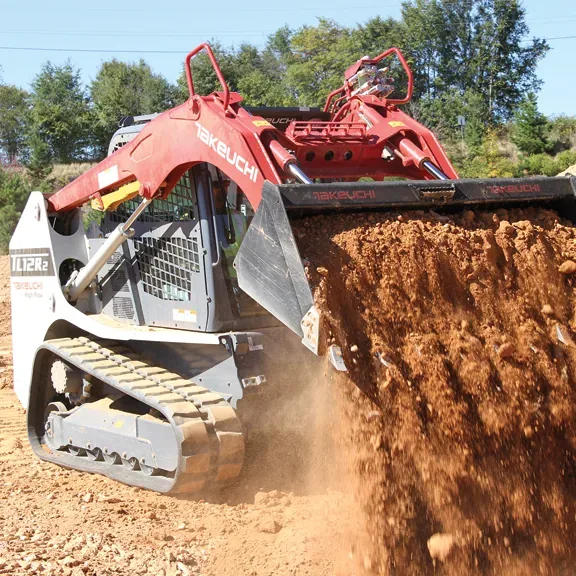
Driveway entrance culverts
Where a new drive crosses the roadside ditch, the pipe carries the ditch under the entrance so the road ditch keeps working.
- New entrances
- Second gates and field entrances
- Cattle guard approaches
Culvert installation · Driveway & ranch road culverts
A culvert has one job: let the ditch keep running under your drive. Set at the wrong grade or too small, it dams the ditch, silts shut, or takes the entrance with it in the first big rain.
Call 940-567-8111 Get a free estimate
Free on-site estimates · Jack, Wise, Young, Palo Pinto & Parker counties
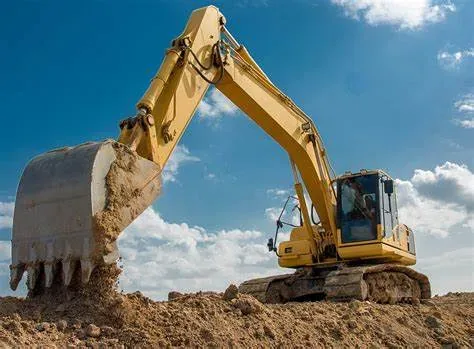
Culvert installation means setting a pipe under a driveway, entrance or ranch road so the ditch or draw keeps flowing beneath it. We dig the trench to grade, bed the pipe, set it at the ditch's flow line, backfill and compact in lifts, cover it deep enough for traffic, and shape the ends so they do not wash. Pipe size depends on how much water reaches it.
Around Jacksboro and across Jack, Wise, Young, Palo Pinto and Parker counties. Most culverts go in alongside a new driveway, a pad or other dirt work, which saves you a second trip.
Where a new drive crosses the roadside ditch, the pipe carries the ditch under the entrance so the road ditch keeps working.
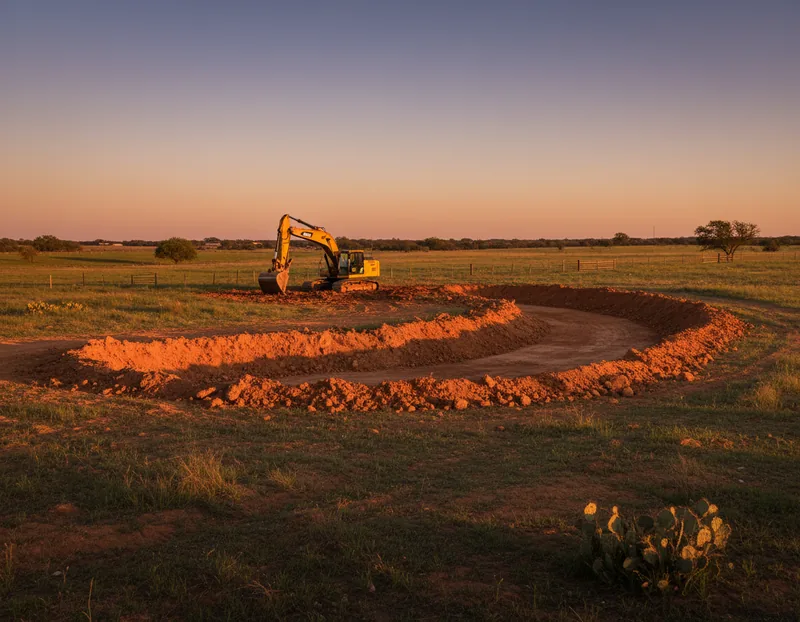
Interior roads that cross a draw or a low spot get a pipe so trucks and trailers cross dry and the road stops washing out.
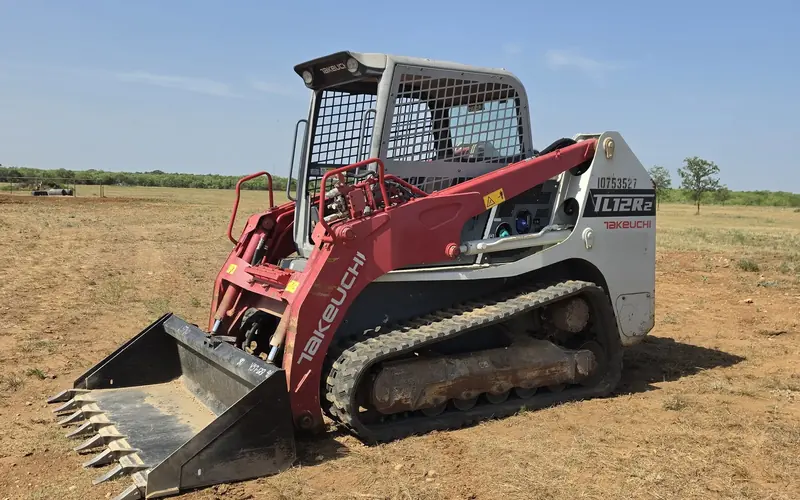
Crushed, rusted-out, silted-in or undersized pipe dug out, the ditch re-cut to grade, and new pipe set where it should have been.
The right pipe diameter depends on how much water actually reaches the culvert, and that comes mostly from the drainage area: how much land sheds water into that ditch or draw above the crossing. Slope, soil and how hard it rains matter too. A culvert under a short entrance on a hilltop and a culvert across a draw that drains a whole pasture are not the same pipe.
Matching the pipe the neighbor used is not a sizing method. A pipe that is too small backs water up until it runs over the top of the drive, and water going over a drive is what cuts it out. A bigger pipe costs more up front and is still usually the cheaper mistake.
Where the culvert sits in a public road ditch, the road owner may make the call for you. On a state highway, TxDOT approves the size and design of any drainage structure in its right-of-way. Some counties set their own requirements for entrance culverts on county roads. On your own interior roads, we look at the ground above the crossing, the drift lines and debris left by past high water, and the ditch on both sides, and talk it through with you before any pipe goes in.
The pipe has to be long enough to carry the full width of the drive plus the sloped fill at each end. A pipe cut too short leaves the ends of the fill hanging over the ditch, and they wash out first.
We look at where the water comes from, where it leaves, and the flow line of the ditch upstream and downstream of the crossing.
If the culvert goes in a state highway or county road ditch, the permit or county approval comes first. On private ground we confirm there is nothing buried in the way and call 811 before we dig.
The trench is cut to grade, soft material comes out, and the pipe gets a firm, even bed so it does not sag in the middle.
The pipe follows the fall of the ditch, with its bottom at the ditch flow line. Too high and it dams the ditch. Too low and it fills with silt.
Fill goes back in lifts and is compacted around and over the pipe, with enough cover for what will drive across it. Follow the pipe maker's minimum cover.
The fill is sloped at each end and protected where water hits it, so the ditch banks and the drive do not wash out around the pipe.
Culvert installation is quoted per job after we walk it. We do not price it by the foot over the phone, because what is around the pipe costs more than the pipe. What moves the number:
It is quoted per job after we walk it. Pipe size and length, how deep the ditch is, rock, whether an old pipe has to come out, end protection and any permit requirements set the price. A culvert set as part of a driveway or pad job usually costs less than one done on its own trip.
It depends on how much water reaches it, which comes mostly from the size of the drainage area above the crossing. On a state highway TxDOT approves the size, and some counties set a minimum for county road entrances. On private roads we size it from the ground above the crossing and past high water signs. Do not size it by guessing or by copying the neighbor.
On a state highway, yes. TxDOT requires a Permit to Construct Access Driveway Facilities on Highway Right of Way (Form 1058), and it approves the drainage structure. On a county road it depends on the county, and many require a permit. Call the county before the ditch is touched.
Usually because it was set below the ditch flow line or too flat, so water slows down in the pipe and drops its sediment. Resetting the pipe at the right grade and cleaning the ditch on both sides normally fixes it.
Either the pipe is too small for what that ditch carries, or it was partly plugged with silt or debris. Water running over a drive cuts it out fast. The fix is a pipe sized for the drainage and set at the flow line.
Yes. We dig out the old pipe, re-cut the ditch to grade, set new pipe at the flow line, backfill and compact it, and rebuild the drive surface over it.
We are based in Jacksboro and work out from there across Jack, Wise, Young, Palo Pinto and Parker counties. If you are close to the edge of that circle, call and ask — we will tell you straight whether it is worth the drive for both of us.
We will walk the ditch, look at where the water comes from, and tell you what it takes.