
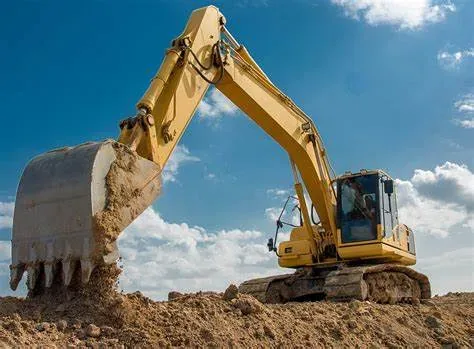
How much dirt moves
The size of the pad and how far the ground falls across it set how many yards of cut and fill it takes.
- Pad footprint and height
- Slope of the site
Pad site prep · House, barn & shop pads
A pad that holds is mostly two things: fall that sends water away from the slab, and fill compacted so it does not settle. Both are invisible when the job is done, which is why they get skipped.
Call 940-567-8111 Get a free estimate
Free on-site estimates · Jack, Wise, Young, Palo Pinto & Parker counties
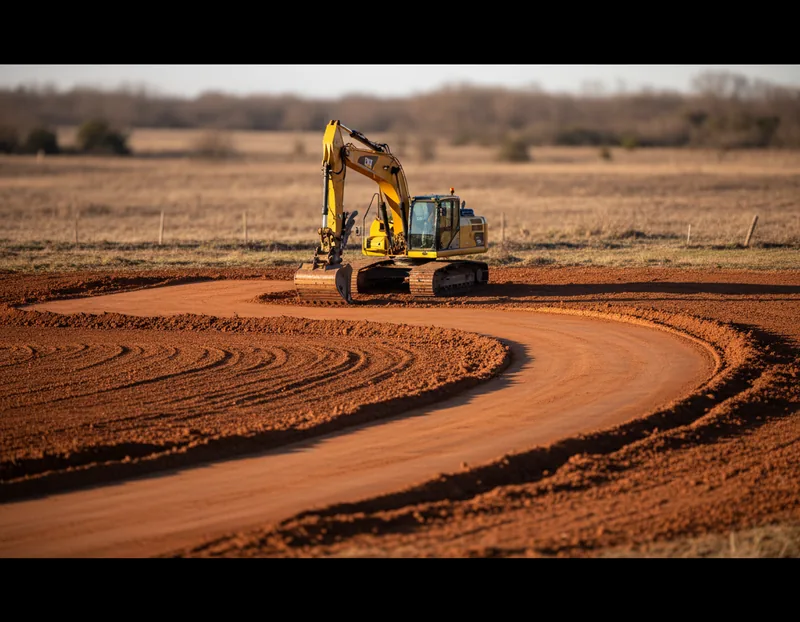
A house pad is quoted per job, because the cost depends almost entirely on how much dirt has to move and where it comes from. A modest pad on ground that is close to level, built from material on your own property, is a very different number from one needing several hundred yards of imported select fill. We walk the site and quote it free.
A building pad is the raised, level, compacted platform a slab or building sits on. Building one right means cutting the high side, filling the low side, bringing it up to a finished elevation above the surrounding grade, and shaping it so water runs away from the building on every side.
We build pads for houses, barndominiums, barns, shops, and equipment and hay sheds across our five counties, with our own excavator, dozer and Takeuchi track loaders. Most pad jobs start with clearing the site and many finish with a driveway to it, and doing those on the same trip saves you a mobilization.
Brush, roots and the organic topsoil come off the footprint. Roots and topsoil rot and settle, so they do not belong under a slab.
The pad is staked to your building footprint with working room around it, and a finished elevation set above the surrounding grade.
Fill goes down in thin lifts, each one compacted before the next goes on. Slower than dumping it all at once, and the difference between a pad that is true in five years and one with a low corner next winter.
The top is finished flat to your builder's needs and the sides are sloped so water falls away from the building, not back toward it.
Native material. Usually the cheapest option is dirt from your own property. Very often the fill for a pad comes out of a stock tank we are digging or cleaning out on the same job, which gets two things done for one mobilization.
Select fill. Where the native soil is a clay that swells when wet and shrinks when dry, a builder or foundation engineer will often call for select fill under the slab: a lower-plasticity material that moves much less with moisture. If your plans specify a fill type, a pad thickness or a compaction requirement, we build to that spec.
Caliche and base rock. Caliche and crushed base are common choices for the working surface of barn and shop pads and the apron around them, where trucks and equipment will be driving. We can source and haul base rock, or place material you have had delivered.
We do not give flat pad prices over the phone. These are the reasons.
The size of the pad and how far the ground falls across it set how many yards of cut and fill it takes.
On-site material is far cheaper than imported select fill or rock, which is priced by the load plus trucking.
Clearing needed first, rock to cut through, soft ground, access for trucks, and any spec from your engineer or builder.
It depends on how many yards of dirt move and whether the fill is from your property or hauled in. We quote after seeing the site. A flat pad price given over the phone is a guess.
High enough to sit above the surrounding grade so water falls away on every side. Your builder, engineer or the county, if you are near a floodplain, may set a specific elevation, and we build to it.
Usually, and it is normally the cheapest way. Fill often comes from a stock tank dug or cleaned out on the same job.
Select fill is a lower-plasticity fill that shrinks and swells less than native clay. Whether you need it depends on your soil and your foundation design. If your plans or engineer call for it, we use it.
If it is compacted properly in lifts, it is ready when we leave. Where your schedule allows, we suggest letting it see one good rain before the slab goes down. It is a free test that the drainage works.
Yes. Barn, shop, barndominium and equipment shed pads are built the same way, often with a caliche or base rock surface where equipment will be driving.
We are based in Jacksboro and work out from there across Jack, Wise, Young, Palo Pinto and Parker counties. If you are close to the edge of that circle, call and ask — we will tell you straight whether it is worth the drive for both of us.
We will come look at the site, where the water goes and where the fill can come from, and give you a real number.