
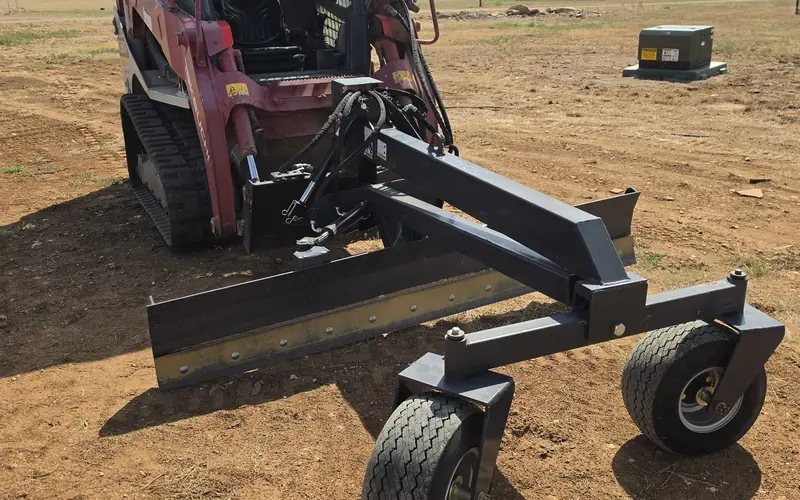
New gravel driveways
Clearing the route, cutting in, shaping the crown and ditches, and placing base and gravel.
- Route cleared
- Crowned and ditched
- Base rock and gravel
Driveways · Gravel drives & culverts
Most driveway problems are water problems. Get the crown, the ditches and the culvert right, and the rock stays where you put it.
Call 940-567-8111 Get a free estimate
Free on-site estimates · Jack, Wise, Young, Palo Pinto & Parker counties
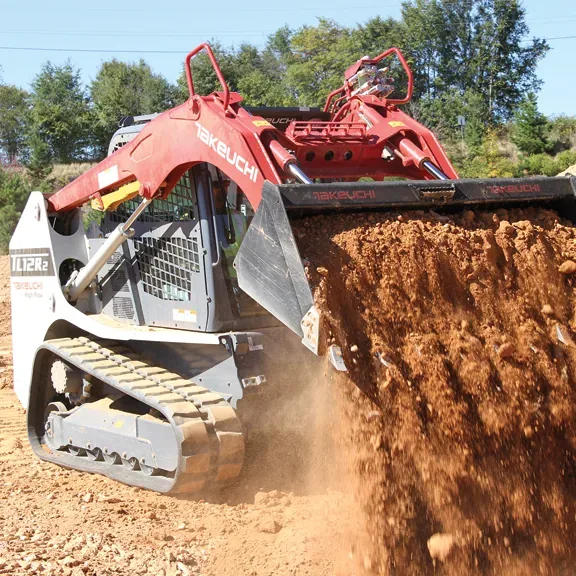
A rural gravel driveway is quoted per job after we walk it, because length, drainage and rock are what set the price. A short drive on firm, well-drained ground is a small job. A long ranch drive needing clearing, cut and fill, several loads of base rock and a culvert at the road is a much bigger one. Estimates are free.
A crown. The drive is shaped higher down the centerline so rain runs off to the sides instead of down the tire tracks. A flat drive becomes a creek in the first storm.
Ditches that go somewhere. Water that comes off the crown needs a ditch that carries it away and lets it out, not one that dead-ends and soaks back into the roadbed.
A firm base. Soft organic dirt is stripped out, the subgrade is shaped and compacted, and base rock goes down in a layer thick enough for what will drive on it. A drive for a pickup and a drive for loaded cattle trailers and gravel trucks are not the same drive.
A surface. Gravel or crushed rock over the base, spread and packed.
If your drive washes out every spring, the fix is nearly always drainage rather than more rock. Add gravel to a drive that carries water and you have just given the water something new to carry away.
New drives and fixing old ones.
Clearing the route, cutting in, shaping the crown and ditches, and placing base and gravel.
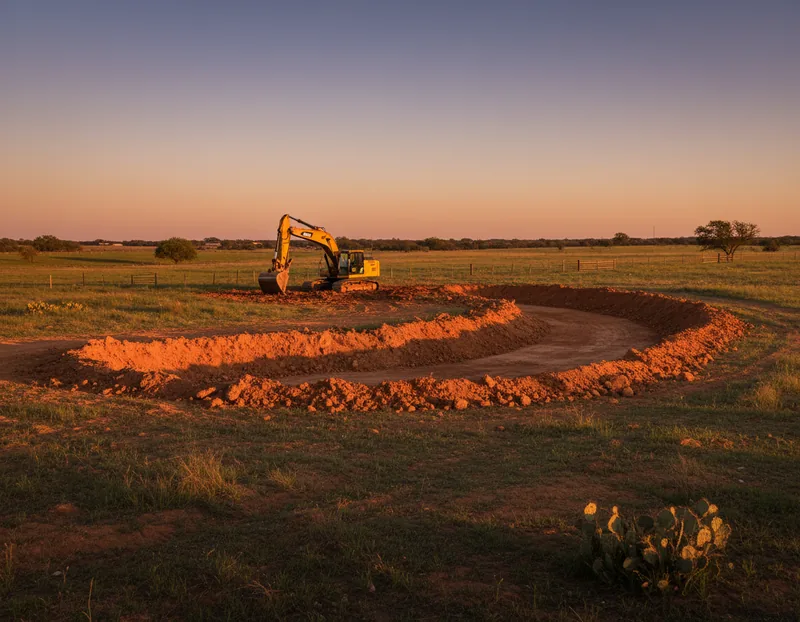
Rutted, flat or potholed drives cut back, re-crowned and re-rocked so they shed water again.
Culverts set under entrances and low crossings at the right invert, plus cattle guard approaches.
Where a drive crosses a roadside ditch, a culvert pipe carries the ditch water under the entrance. Set too high, it dams the ditch and water backs up. Set too low, it fills with silt. It has to sit at the right invert, the elevation of the bottom of the pipe, so the ditch keeps flowing through it, and it has to be large enough for the water that ditch actually carries.
The pipe then gets bedded, backfilled and covered deep enough that trucks crossing it do not crush it, with the ends shaped so the ditch banks do not wash out around it.
It is quoted per job. What drives it: length and width, how much clearing and cut and fill the route needs, how much base rock and gravel goes down and how far it is trucked, and whether culverts are needed. We give you a number after walking it.
Yes. TxDOT requires a Permit to Construct Access Driveway Facilities on Highway Right of Way (Form 1058) for driveways onto the state highway system. The property owner or an authorized representative applies through TxDOT.
If the entrance crosses a ditch that carries water, yes. Without one, the drive dams the ditch. On state highways TxDOT reviews drainage as part of the permit, and on county roads the county may have its own requirements.
Almost always because water is running down the drive instead of across it and off. The fix is the crown and the ditches. More rock alone just gets carried off in the next storm.
Yes. We can source and haul base rock and gravel, or place material you have already had delivered.
We build the approaches and the ground work a cattle guard sits on, graded so water does not pond in the pit. Tell us what guard you are using when we walk it.
We are based in Jacksboro and work out from there across Jack, Wise, Young, Palo Pinto and Parker counties. If you are close to the edge of that circle, call and ask — we will tell you straight whether it is worth the drive for both of us.
We will walk the route, look at where the water goes, and tell you what it takes.