
Guide · November 2026
Jack County Burn Ban Lifted: Burning Brush Piles This Winter
Jack County lifted its burn ban November 7, 2026, and Palo Pinto on November 11. What state rules still apply to brush piles, and when mulching wins.
Call 940-567-8111 Get a free estimate
Free on-site estimates · Jack, Wise, Young, Palo Pinto and Parker counties
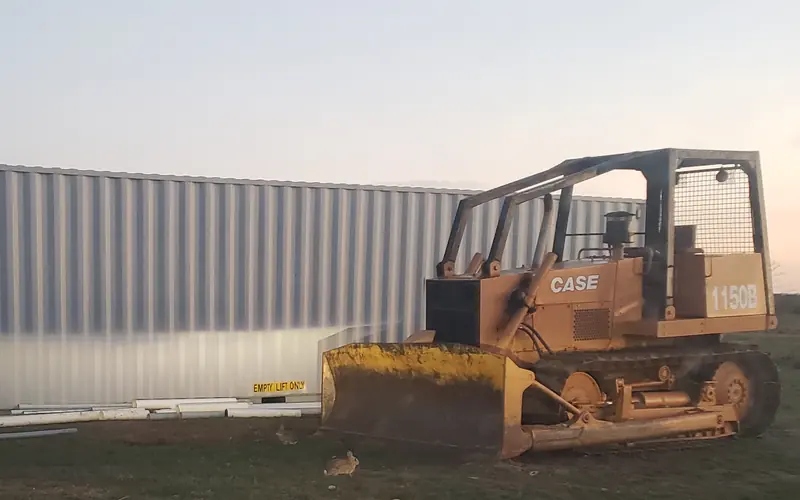
Jack County lifted its countywide burn ban on November 7, 2026. The ban had been in place since August 7, 2026, according to Texas A&M Forest Service data tracked daily by burnbantexas.com. Palo Pinto County followed on November 11, 2026 (Palo Pinto status). Wise, Young and Parker counties were still under bans that same morning.
If you cleared land this fall and have cedar and mesquite piles sitting in the pasture, that news matters. Here is what changes, what does not, and when mulching makes more sense than burning.
Jack County's burn ban was lifted November 7, 2026
A county burn ban is set by the commissioners court and covers the unincorporated parts of the county. When it lifts, the county's own restriction on outdoor burning goes away. The state's outdoor burning rules do not. Bans come back fast when it turns dry and windy, so check the Texas A&M Forest Service burn ban map and your county's current order on the day you plan to burn.
Lifted does not mean anything goes
The Texas Commission on Environmental Quality explains the state rules in its guide Outdoor Burning in Texas (RG-049). In a county like Jack, Palo Pinto or Young, the rule allows on-site burning of "trees, brush, grass, leaves, branch trimmings, or other plant growth," including plant growth from "landclearing operations," when "the material is generated only from that property." In plain words, you burn your own brush on your own land. You do not haul someone else's brush in to burn.
That burning still has to follow the state's timing and weather limits. The guide lists them as "beginning burns at least one hour after sunrise, ceasing burns the same day at least one hour before sunset, and ensuring that a responsible party is present while a burn is active and a fire is progressing." It also says not to start unless winds are "at least 6 miles per hour (mph)" and "no faster than 23 mph," and that smoke must not create a hazard on a public road.
A few more things to keep in mind:
- Burn only the brush. The guide lists items that must never go in a fire, including "electrical insulation, treated lumber, plastic, non-wooden construction or demolition materials, heavy oils, asphaltic materials."
- City limits have their own rules. Inside a town, local ordinances can prohibit burning altogether.
- You are still responsible. TCEQ notes that whoever burns "remains liable for damages, injuries, and other consequences that may result from burning."
- Check the day. A lifted ban does not make a dry, gusty afternoon safe.
This is a summary, not legal advice. Read your county's order and call your county or the TCEQ regional office if you are unsure.
Wise and Parker counties have a stricter rule, ban or no ban
Wise and Parker counties are part of the Dallas-Fort Worth ozone nonattainment area (TCEQ). In those counties, the same TCEQ rule allows burning land clearing brush only "when no practical alternative to burning exists," and the full set of general burning requirements applies. So even after Wise and Parker lift their bans, burn piles are not the default there. Mulching or hauling the brush off is usually the practical answer.
Burn, mulch or haul: picking the method for cedar and mesquite
How the brush is handled is one of the biggest things that moves the price of a clearing job. These are the three options we work with.
- Stack it to burn when allowed. We grub mesquite out below the root crown so it does not come back, then push the brush into piles well away from fences, buildings and trees you want to keep. You burn it when the county and the weather allow. See mesquite grubbing and dozer land clearing.
- Mulch it in place. A forestry mulcher grinds cedar and brush where it stands and leaves the mulch on the ground. No piles, no fire, no waiting on a burn ban. It is the go-to in Wise and Parker counties. See forestry mulching.
- Haul it off. The cleanest finish and the most expensive. It fits a homesite or lot where you do not want a pile sitting until spring.
On a lot of jobs the answer is a mix: mulch the cedar, grub the mesquite and stack what is left in one spot.
Why November to February is clearing season
- The brush is dormant. With the leaves off, it is easier to see how thick the stand is and which trees are worth keeping.
- You get ahead of spring. Ground cleared in winter is open before green-up, so grass gets a head start instead of fighting new brush.
- Your build date holds. A house pad or barndominium site cleared now is ready when your builder is.
- The piles have time. Brush stacked in December can wait for a calm, legal burn day.
Burn ban status in the counties we clear
| County | Burn ban as of November 11, 2026 | DFW ozone nonattainment area |
|---|---|---|
| Jack | Lifted November 7, 2026 | No |
| Palo Pinto | Lifted November 11, 2026 | No |
| Young | In effect | No |
| Wise | In effect | Yes |
| Parker | In effect | Yes |
Sources: Texas A&M Forest Service data via burnbantexas.com, checked 5:00 AM November 11, 2026, and TCEQ. Bans change with the weather, so check before you burn. For clearing while a ban is still on, see clearing land during a burn ban.
Quick answers
Is the Jack County burn ban lifted?
Yes. Jack County lifted its countywide burn ban on November 7, 2026, after it had been in place since August 7, 2026. Palo Pinto County lifted its ban on November 11, 2026.
Can I burn brush piles now that the ban is lifted?
Yes, if it is brush from your own land, burned on that land. State rules still apply: start at least one hour after sunrise, finish at least one hour before sunset, keep someone there while it burns, and burn only when the wind is between 6 and 23 mph. Inside city limits, local rules can forbid burning.
Can I burn land clearing brush in Wise or Parker County?
Only when no practical alternative to burning exists, because both counties are in the Dallas-Fort Worth ozone nonattainment area. Mulching or hauling the brush off is usually the practical answer there.
Should I burn, mulch or haul off cedar and mesquite?
Many jobs use a mix: mulch the cedar in place with a forestry mulcher, grub the mesquite out below the root crown, and stack what is left in one spot to burn when the county and the weather allow. Hauling it off gives the cleanest finish but costs the most.
Get a quote on your acreage
Land clearing around Jacksboro runs $1,200 to $5,000 per acre, depending on how thick the brush is, the terrain and whether the debris is stacked, mulched or hauled. The land clearing cost guide breaks it down. Tell us roughly how many acres you have and how thick it is, and we will walk the ground and give you a real number. Call Jacksboro Services at 940-567-8111 or see our land clearing page.
Want a number on your place?
Tell us the acreage and roughly how thick it is. We will come walk it, free, and put a real figure in your hand. Call 940-567-8111.